Distribution — Bin frame
Bin frame
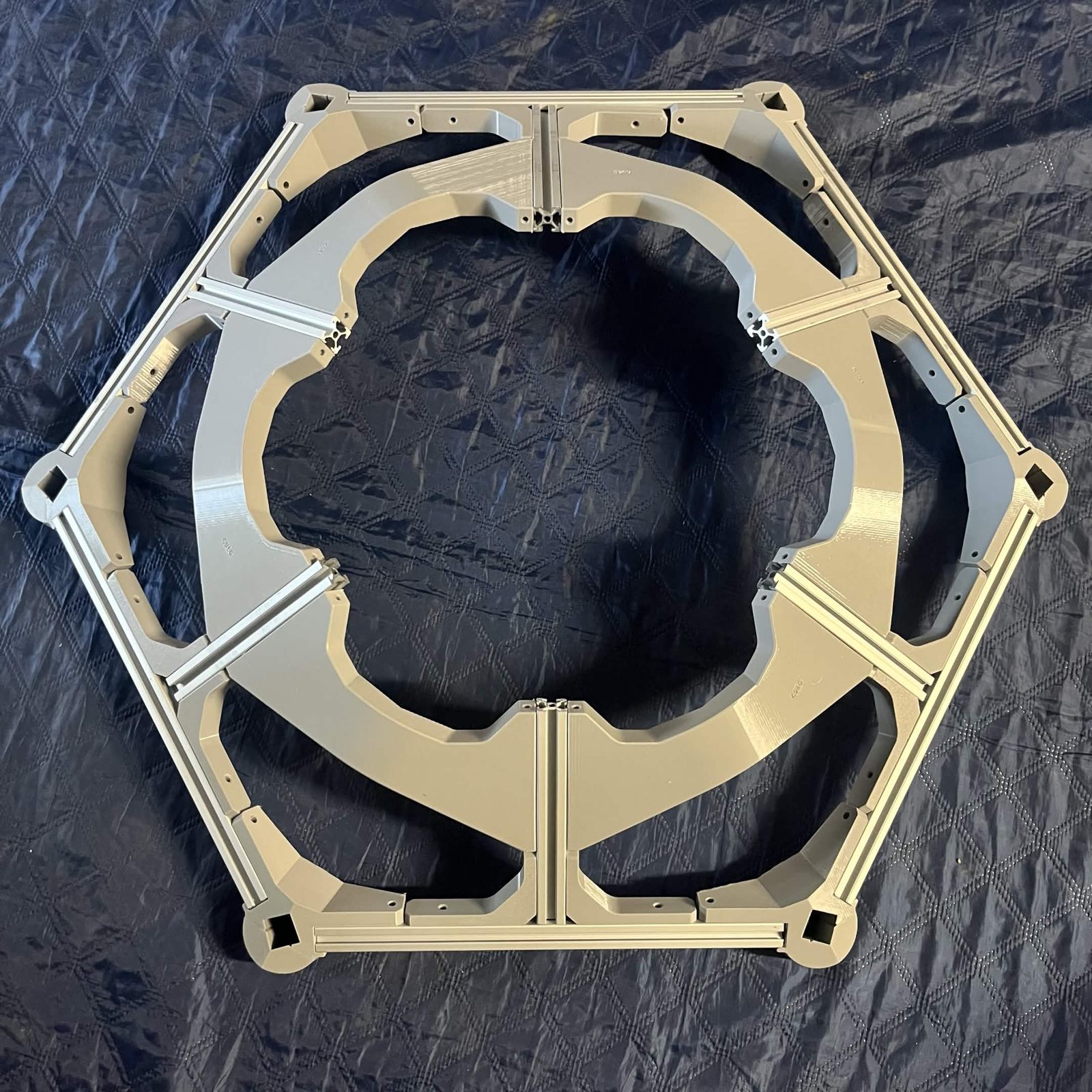
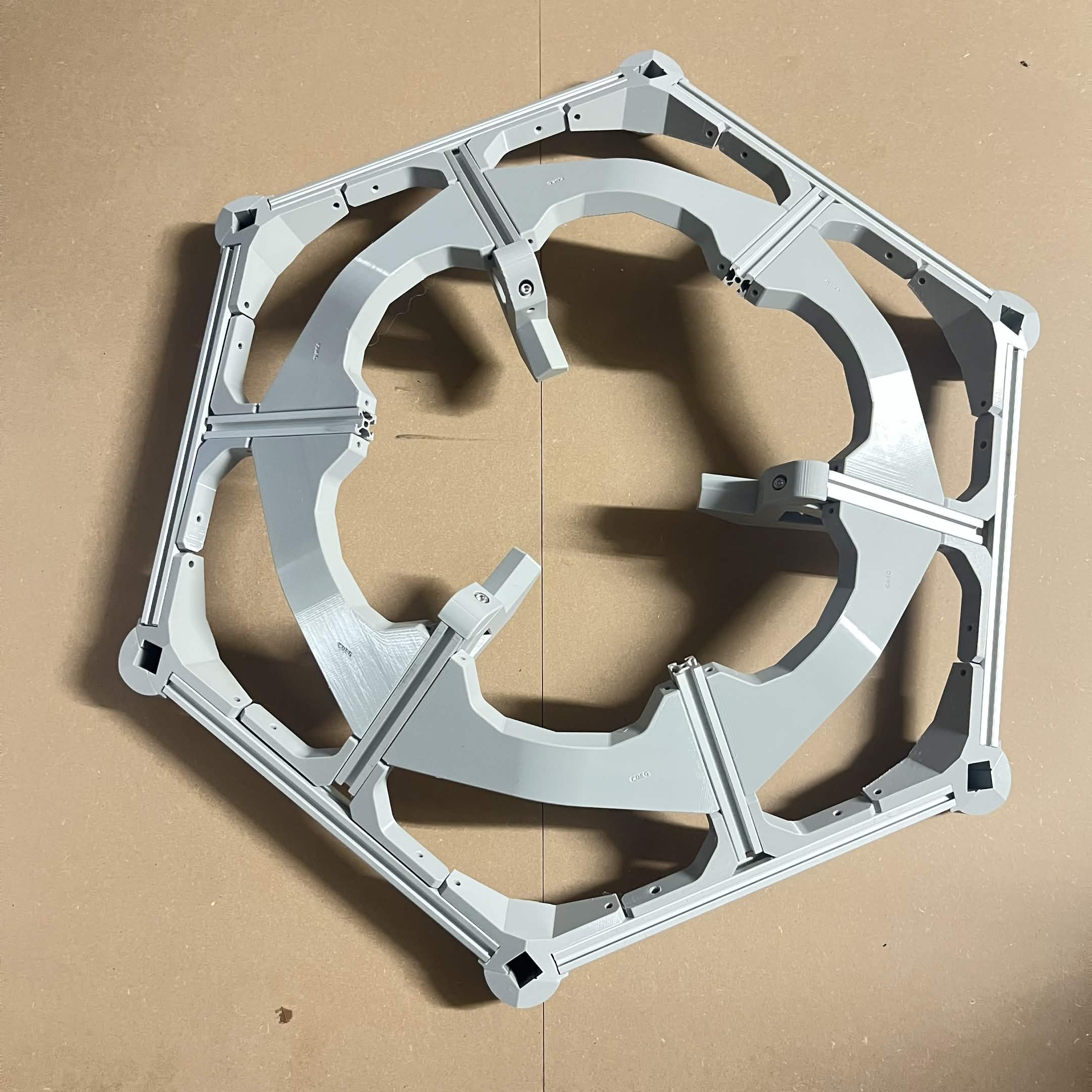
The layers of bins, each built flat and on its own. Layer count is N (however many bin layers your machine has, not the total number of bins); build in this order.
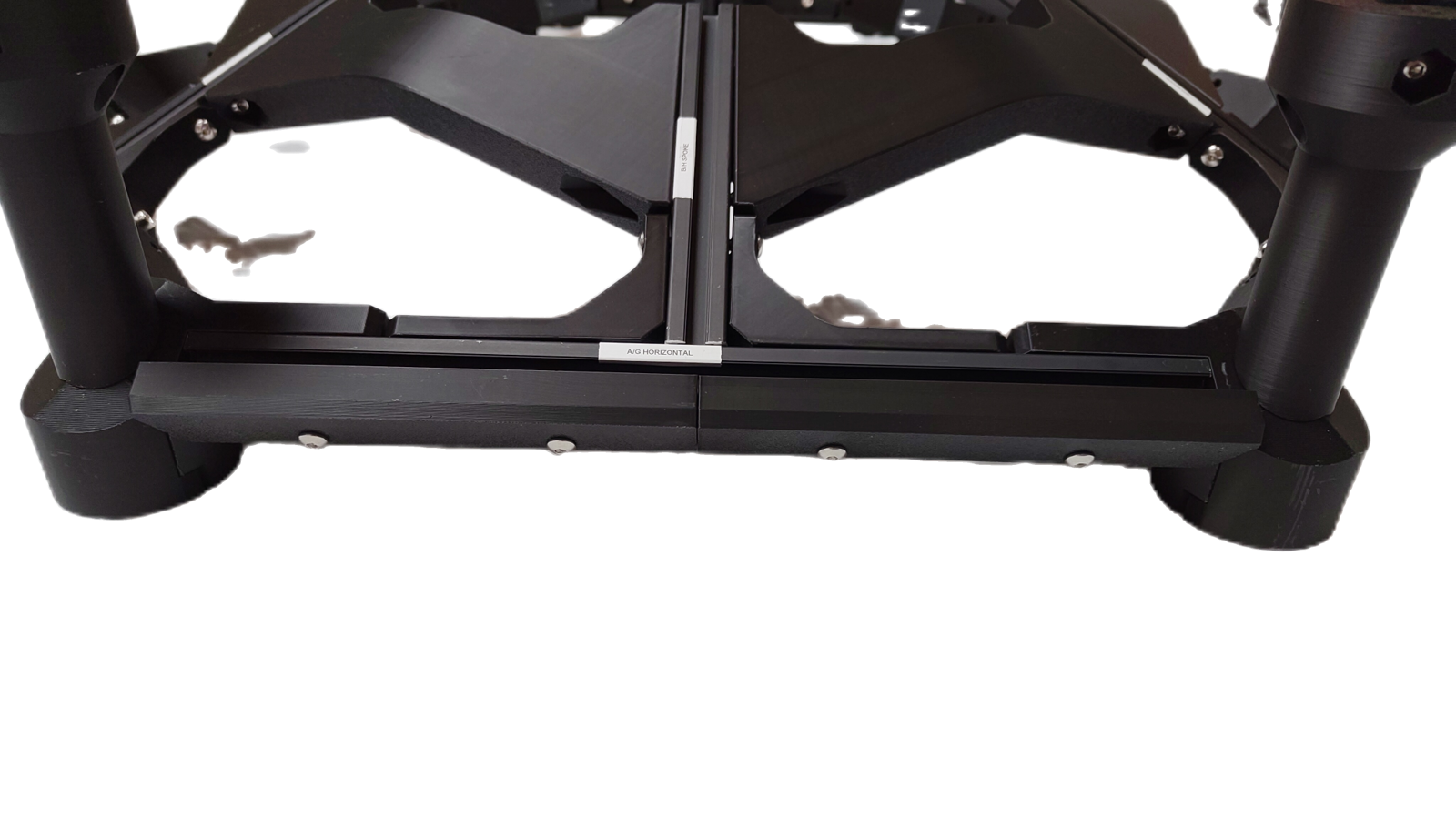
The bin frame is the stack of hexagonal layers that makes up the body of the machine: each layer carries one chute-and-bin pair that catches pieces routed to it as they come down from distribution above. The bottom interface hangs underneath the bottom layer, and the stack is capped by Top interface.
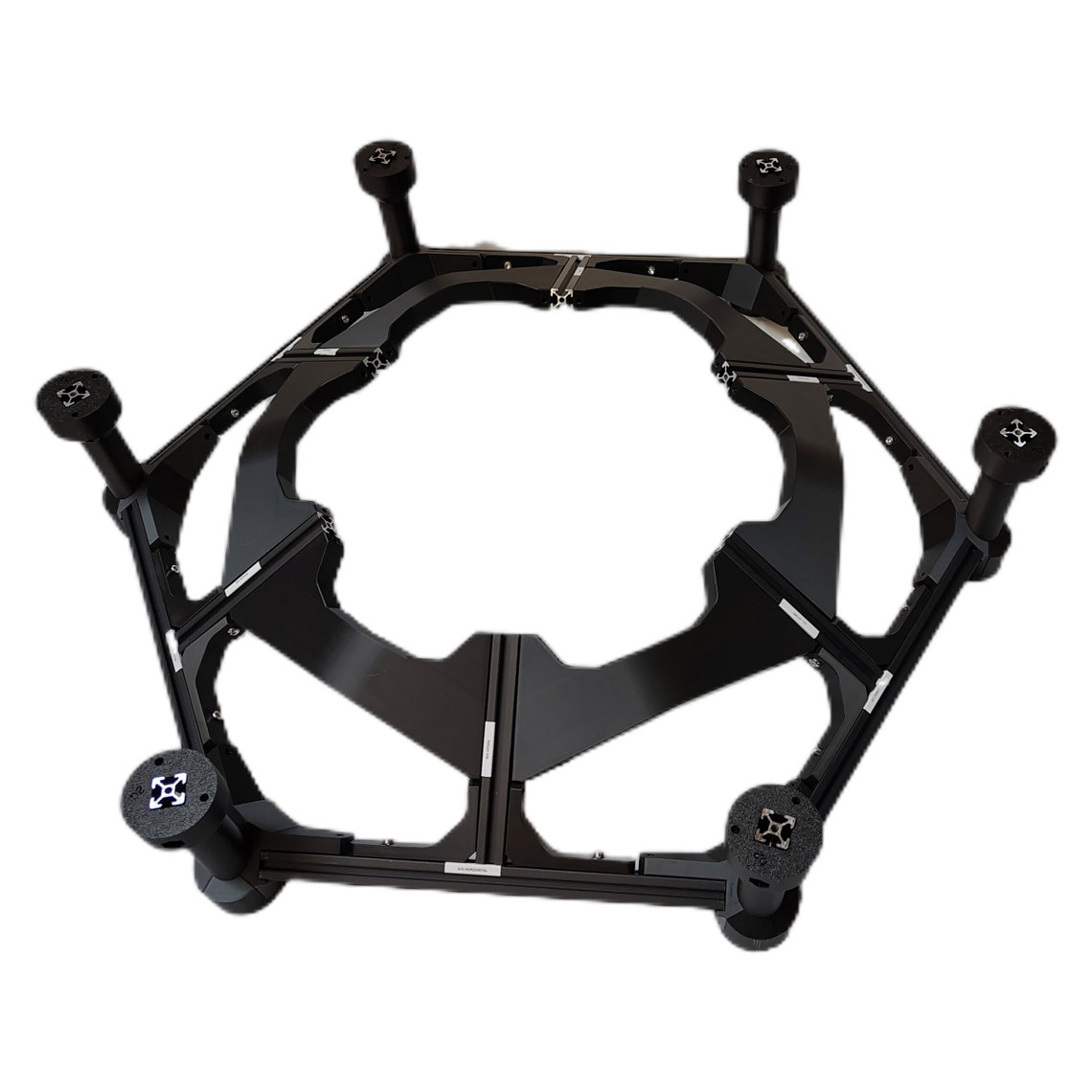
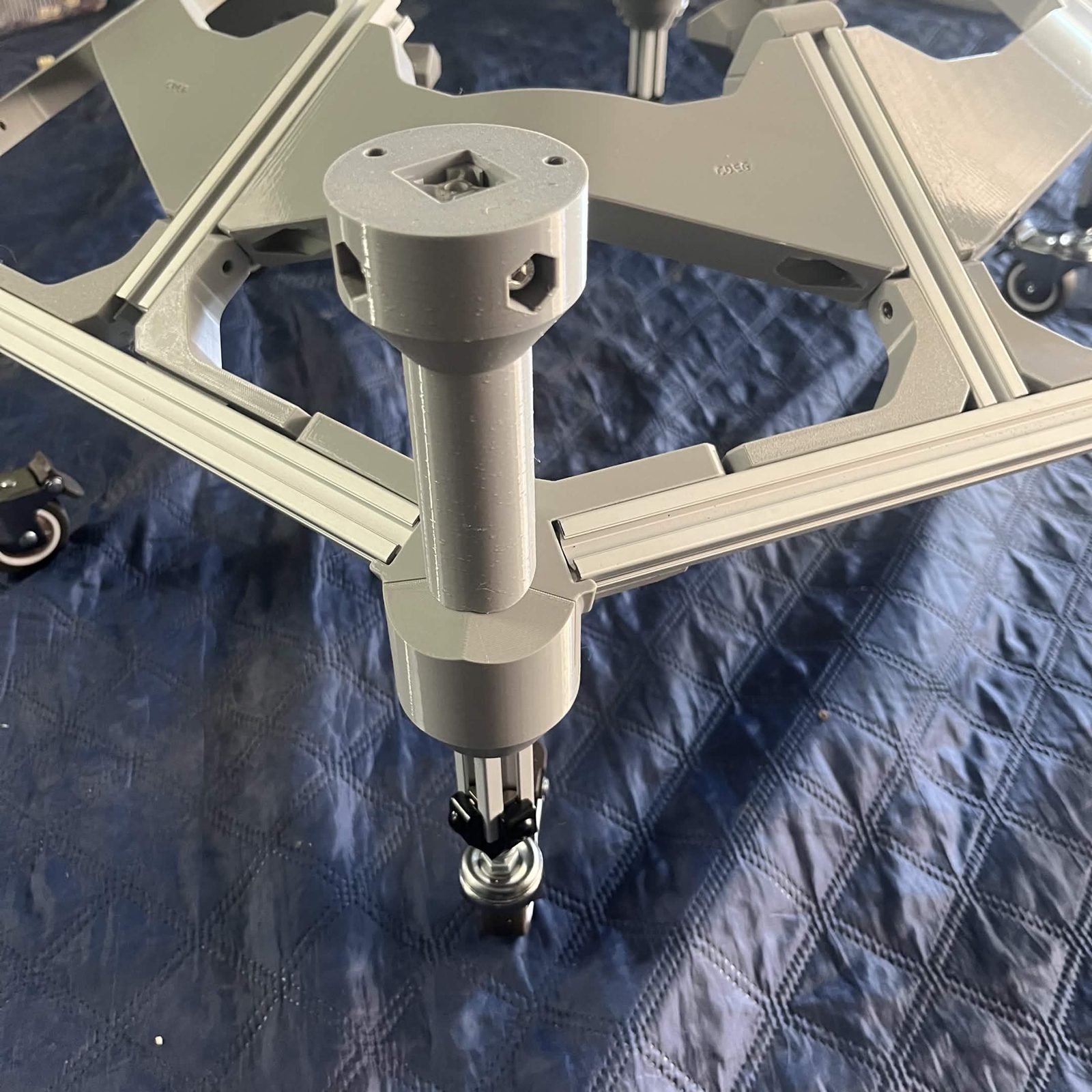
Every bin layer is the same layer. The lowest one differs only at floor level, where a longer extrusion carries on down to a caster instead of stopping, so an N-layer machine is N−1 regular layers and 1 bottom layer. Each is built flat, on its own, and they are joined into the tower afterwards on Stacking the layers.
- Build the hex frame. The shared hexagonal ring. Build N+1 of these first: one per planned layer, plus one for the top interface. The bottom interface does not need one.
- Regular layers. Build N−1 of these, one per bin layer except the lowest.
- Bottom layer. The remaining layer, on the foot extensions the casters mount to. Build one.
- Bottom interface. The Lazy Susan the bottom of the chute stack sits on. Build it on the bench whenever you like; it is fitted at the very end, after the chutes are in.
- Bin retainers. The same twelve rails on every bin layer. One pass per bin layer, the bottom one included.
- Top interface. Outside this section, but takes one of the hex frames from step 1 and caps the stack.
Once every layer is built, Stacking the layers joins them into the tower.
The finished result
Each page ends in one of these.